
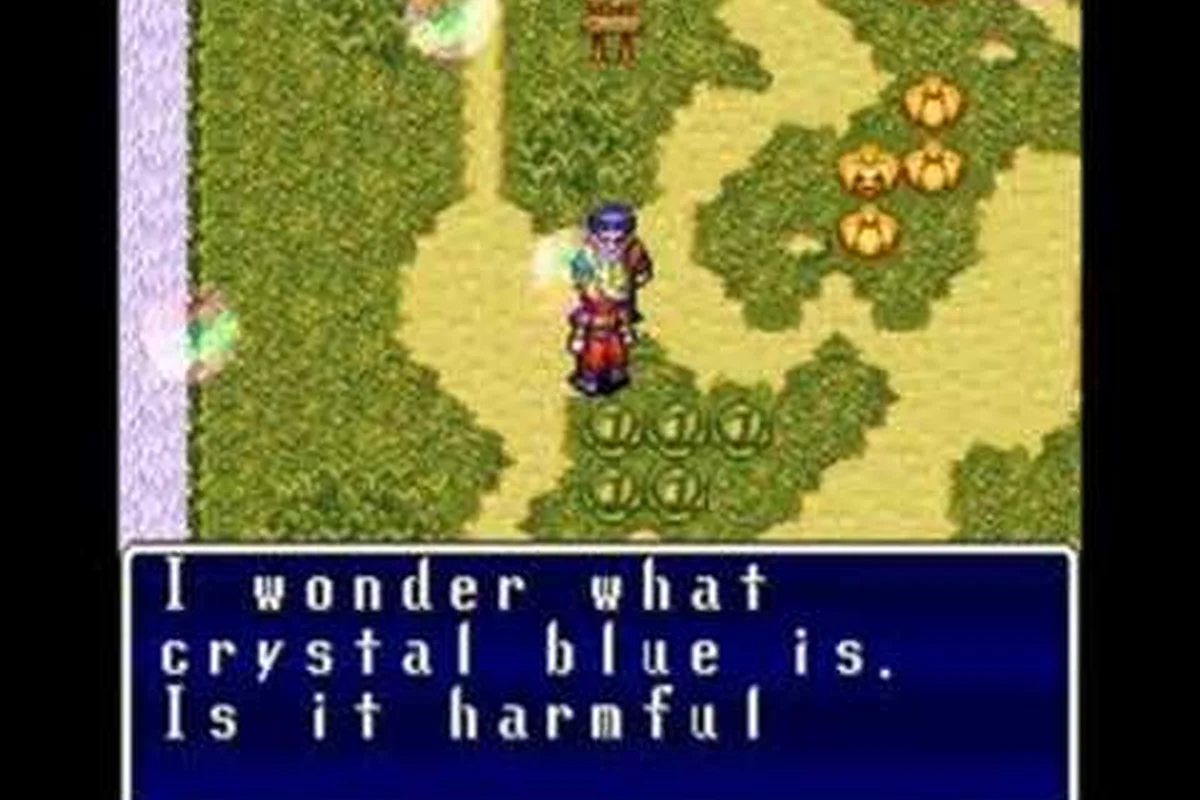
Core Battle Rules: Timing, Range and Combos
Terranigma's combat system explained from the ground up starts with a deceptively simple premise: Ark carries a spear, moves in eight directions, and attacks with a single button press. What makes the system distinct from other 1995-era action RPGs is the momentum-based attack flow — every swing has a forward lunge that carries Ark toward his target, which means spacing matters more than raw button speed. According to the official Steam page, the game is described as having snappy combat built on the Quintet action RPG framework, and that snappiness comes from how quickly Ark recovers between attacks.
The core loop revolves around three offensive tools and one defensive tool. Players can execute a standing spear thrust, a running attack that delivers increased damage at the cost of commitment, and a jump attack that closes vertical distance while also acting as a repositioning tool. The guard command is where the system gets interesting because it does not behave like a traditional block — it deflects projectile attacks but leaves Ark fully vulnerable to physical strikes, a design choice that forces players to read enemy types before committing to defense. This asymmetry between offense and defense is the foundation of every encounter in the game.
| Combat Action | Input Context | Primary Use | Risk Level |
|---|---|---|---|
| Standing Thrust | Neutral + Attack | Safe poke damage | Low |
| Running Attack | Hold direction + Attack | Burst damage opener | Medium |
| Jump Attack | Jump + Attack | Overhead enemies, gap close | Medium |
| Guard | Hold Guard button | Block projectiles only | Situational |
Because enemy behavior is tied to movement patterns rather than health thresholds, the terranigma combat guide approach that most veteran players recommend is to observe a new enemy's idle animation before engaging. Does it twitch toward Ark when he steps forward? Does it rear back before spitting? Those tells determine whether you should open with a running attack or wait behind a guard for a projectile to bounce off. While the original Super Famicom release in 1995 established these mechanics, the 2027 re-release preserves them faithfully according to community documentation, meaning the strategies outlined here will apply across every platform version.
Spear Techniques: Mastering the Thrust and Lunge
The terranigma spear techniques guide begins with understanding that the spear is not a sword. It has no horizontal arc and no crowd-control sweep, which means Ark can only damage enemies that sit directly in front of his facing direction. This limitation is offset by the weapon's exceptional reach, giving players roughly one tile of extra distance compared to melee weapons in other Quintet titles. The standing thrust is the fastest attack in Ark's kit, recovering in approximately 20 frames, and it is the only attack that can be chained into an immediate second thrust without a movement reset.
The running attack is the damage-dealing centerpiece of the terranigma running attack guide. When Ark holds a direction and presses attack, he lunges forward with a spear strike that deals roughly 1.5x the damage of a standing thrust while carrying him one additional tile forward. This forward carry is both the technique's greatest strength and its most dangerous weakness — the lunge commits Ark to a position he cannot cancel, so whiffing a running attack against a fast enemy leaves him standing directly beside that enemy with no immediate defensive option. Community data from speedrun discussions indicates that the running attack's startup is approximately 10 frames slower than a standing thrust, a window that matters against aggressive late-game enemies.
Chaining Thrusts and Running Attacks
Veteran players report that the most efficient damage pattern is a running attack opener followed by two standing thrusts before backing off. This three-hit sequence works because the running attack's lunge closes the initial gap, the two standing thrusts exploit the enemy's brief stagger state, and the backstep resets Ark to a safe spacing. Against enemies that do not stagger, however, this pattern falls apart — those enemies will trade hits with Ark during the second standing thrust, and the trade is rarely favorable on higher difficulties.
Jump Attack as a Situational Tool
The jump attack exists in a strange middle ground. It deals damage equal to a standing thrust but requires a jump animation that leaves Ark airborne and vulnerable to any enemy with an upward-reaching hitbox. Its real value comes from two specific scenarios: striking enemies positioned on elevated platforms and punishing enemies with low horizontal reach. Because the jump attack's landing lag is shorter than its startup, players can use it as an aggressive repositioning tool when a running attack would carry Ark too far forward.
| Technique | Damage Multiplier | Approx. Recovery | Best Use Case |
|---|---|---|---|
| Standing Thrust | 1.0x | Fast | Safe pokes, chain follow-ups |
| Running Attack | 1.5x | Medium | Openers, gap closing |
| Jump Attack | 1.0x | Medium | Elevated targets, repositioning |
| Guard | 0x (defensive) | Instant | Projectile deflection |
The terranigma spear techniques guide conclusion that most players arrive at after a few hours is that the running attack should be your default engagement tool, while the standing thrust handles sustained damage windows. The jump attack remains a niche option that you will use less than 10% of the time, but those 10% moments — a flying enemy hovering just above spear reach, a boss with a ground-level weak point — can make or break an encounter.
Guard Mechanics: Why Terranigma's Block Is Not a Block
The terranigma how to guard question has a counterintuitive answer: you guard by holding the guard button, but the guard does not reduce damage from melee attacks at all. The guard command creates a projectile deflection field around Ark that causes incoming ranged attacks — enemy spit, thrown rocks, magical bolts — to bounce off harmlessly. Against any enemy that swings a physical weapon or lunges with a body part, the guard is completely useless, and Ark will take full damage as if he were standing still. This design decision was deliberate, pushing players toward movement-based defense rather than holding a block button.
Understanding which enemy attacks count as projectiles is the core skill in the terranigma how to guard learning curve. The rule is straightforward in principle but requires per-enemy knowledge in practice. If the attack has a visible projectile that travels across the screen, the guard will deflect it. If the attack is an extension of the enemy's body or weapon, the guard will not help. Some late-game enemies mix both types, forcing players to recognize attack animations quickly and switch between guarding and dodging.
Reading Projectile Tells
Most projectile-based enemies in Terranigma share a common tell: they pause, rear back, or flash before launching their ranged attack. This pause is the window where you should press and hold guard. Because the guard has no activation delay, you can wait until the projectile is already in flight and still deflect it, though the generous deflection window does not excuse late reactions against fast-moving projectiles. Magirock-powered projectiles from magic-wielding enemies travel faster than physical projectiles, and those demand earlier guard activation.
The Melee Vulnerability Trap
The most common mistake new players make with the terranigma how to guard system is holding guard against an enemy that only uses melee attacks. The guard animation locks Ark in place, preventing the movement that would otherwise let him dodge, so guarding against a melee enemy actively makes the situation worse. If you are fighting a Crystal Crab or any claw-based enemy, drop the guard and rely on positioning instead. The guard is a tool for specific enemy types, not a universal defensive option.
| Enemy Attack Type | Guard Effective? | Correct Response |
|---|---|---|
| Projectile (spit, rock, bolt) | Yes | Hold guard, deflect, counter |
| Melee swipe (claw, weapon) | No | Dodge or outspace |
| Charging body attack | No | Sidestep, then punish |
| Magical projectile | Yes (faster timing) | Guard earlier than physical |
Because the guard deflects rather than absorbs, there is no stamina cost or guard-break mechanic in Terranigma. You can hold the guard indefinitely, but doing so is rarely optimal because it immobilizes Ark while enemies close distance. The terranigma combat guide recommendation is to use guard in short, deliberate pulses — deflect the projectile, release the guard, and immediately transition into a running attack to punish the enemy during its recovery animation.
Terranigma Combat Guide: Enemy Archetypes and Counters
Every enemy in Terranigma fits into one of four combat archetypes, and learning these archetypes transforms the game from a series of reaction tests into a predictable puzzle. The projectile specialist sits at range and fires attacks that the guard can deflect, making it the easiest archetype to counter once you recognize its tell. The melee rusher charges Ark directly and must be outspaced or sidestepped. The mixed attacker alternates between projectiles and melee, forcing constant adaptation. The stationary turret never moves but fires projectiles in patterns that require precise guard timing. Recognizing which archetype you are facing determines your entire engagement strategy.
The terranigma combat system explained through archetypes also reveals the game's difficulty curve. Early areas populate mostly projectile specialists and slow melee rushers, giving players room to learn the guard and the running attack separately. Later areas combine mixed attackers with tight corridors, where the lack of a true block becomes punishing because sidestep space is limited. Community documentation from the original 1995 release confirms that difficulty spikes occur whenever the game introduces a new mixed-attacker enemy type, a pattern that holds in the 2027 re-release.
Projectile Specialist Encounters
Against projectile specialists, the optimal loop is simple: hold guard, deflect the incoming shot, then immediately execute a running attack to close the gap while the enemy is in its post-shot recovery. This loop works because projectile enemies typically have long recovery animations after firing, giving Ark a full second or more of free damage time. Repeat the loop two or three times and the enemy falls. The only variation comes from enemies that fire multiple projectiles in a spread, where you must hold guard longer and accept that the counterattack window is shorter.
Melee Rusher Spacing
Melee rushers require the opposite approach: never stand still. The standing thrust's reach advantage means Ark can hit a melee rusher before it gets close enough to land its own attack, but only if you time the thrust to the enemy's approach. Walk backward, wait for the rusher to enter spear range, thrust once, and continue walking backward. This kite-and-poke pattern works against every melee rusher in the game, though faster rushers demand tighter timing. The jump attack guide covers additional vertical positioning options for enemies that resist ground-level pokes.
| Archetype | Signature Behavior | Counter Strategy | Difficulty |
|---|---|---|---|
| Projectile Specialist | Fires from range, long recovery | Guard, then running attack | Low |
| Melee Rusher | Charges directly, no projectiles | Kite with standing thrust | Medium |
| Mixed Attacker | Alternates ranged and melee | Guard pulses + spacing | High |
| Stationary Turret | Fixed position, pattern fire | Timed guard, thrust between volleys | Medium |
The terranigma combat guide principle that ties all archetypes together is that offense and defense are the same action in this game. A well-timed guard is not a defensive pause — it is the setup for your next running attack. A backstep is not a retreat — it is the spacing that lets your standing thrust connect while the enemy's melee swipe whiffs. Players who internalize this principle stop thinking about separate attack and defense phases and instead see a continuous flow of positioning decisions.
Advanced Combat Flow: Combining Every Tool
Once the individual mechanics are comfortable, the terranigma combat system explained at an advanced level is about chaining tools into a seamless engagement rhythm. The opening phase of any fight should use the running attack to close distance and land the first hit before the enemy can act. The sustain phase then uses standing thrusts to deal damage while the enemy is staggered or in recovery, with guard pulses mixed in whenever a projectile appears. The reset phase involves a backstep or jump attack to disengage when the enemy's attack pattern becomes unpredictable.
This three-phase rhythm is not something the game teaches explicitly, but community data from long-time players consistently describes it as the core loop of high-level play. The rhythm works because every tool in Ark's kit has a distinct recovery time, and chaining tools with different recovery times creates windows where Ark is always either attacking or repositioning, never standing idle. Idle time is the enemy's best resource, and eliminating it is the fastest route to consistent damage output.
The Opening Phase in Detail
The opening phase rewards aggression. A running attack executed the moment an enemy enters its aggro range lands before most enemies can start their own attack animation, giving Ark a free first hit. Against mixed attackers, this opening is critical because it staggers the enemy out of whatever ranged attack it was about to fire. The only enemies where the running attack opening fails are those with instant aggro responses, and those are rare enough to treat as exceptions rather than a reason to abandon the aggressive opening.
Sustain and Reset Decision Points
The sustain phase is where most damage happens, and it is also where most mistakes occur. The decision to continue thrusting or to reset depends on the enemy's stagger state. If the enemy is staggering, continue thrusting — each standing thrust extends the stagger slightly, letting you land two or three hits before the enemy recovers. If the enemy is not staggering, reset after one thrust. The reset can be a backstep, a jump attack over the enemy, or a guard pulse if a projectile is incoming. Choosing the wrong reset leads to eating an unnecessary hit, and unnecessary hits are the primary reason players burn through healing items faster than they need to.
| Combat Phase | Primary Tool | Goal | Common Mistake |
|---|---|---|---|
| Opening | Running Attack | Free first hit, stagger | Opening too late |
| Sustain | Standing Thrust | Damage during stagger | Overcommitting to thrusts |
| Reset | Backstep / Jump | Regain safe spacing | Resetting too slowly |
| Defense | Guard Pulse | Deflect projectiles | Holding guard vs melee |
The survival tips guide expands on resource management during these phases, particularly how healing decisions interact with combat flow. The key takeaway from the terranigma combat guide's advanced section is that the three-phase rhythm applies to every fight in the game, from the weakest overworld enemy to the final boss. The difference between encounters is not the tools you use but the timing precision each enemy demands.
Frequently Asked Questions
How does guarding work in Terranigma?
Guard in Terranigma deflects projectiles but does not block melee attacks. Hold the guard button when an enemy fires a ranged attack, and the projectile bounces off harmlessly. Against melee enemies, guarding is useless and locks you in place, so rely on movement and spacing instead.
What is the best attack to use against most enemies?
The running attack is the best opener because it closes distance and deals 1.5x damage, often landing before enemies can react. Follow it with two standing thrusts while the enemy staggers, then backstep to reset. This pattern works against the majority of non-boss enemies.
Can I attack while guarding?
No. Guard locks Ark in place and cancels any attack input until you release the block button. Pulse the guard to deflect one projectile, then immediately release and chain into a running attack — this exploits the enemy's recovery frames and converts the block into a punish.
Why does my guard sometimes fail?
Your guard is not failing; you are likely guarding against a melee attack. Terranigma's guard only deflects projectiles, so any claw swipe, weapon swing, or body charge will hit Ark at full damage. Learn enemy tells to distinguish projectile attacks from melee attacks before committing to guard.
Where can I practice the combat system safely?
Early areas feature mostly projectile specialists and slow melee rushers, making them ideal for practicing the guard pulse and the running attack opening. The original 1995 release and the 2027 re-release share the same enemy progression, so the strategies here apply to every version.