
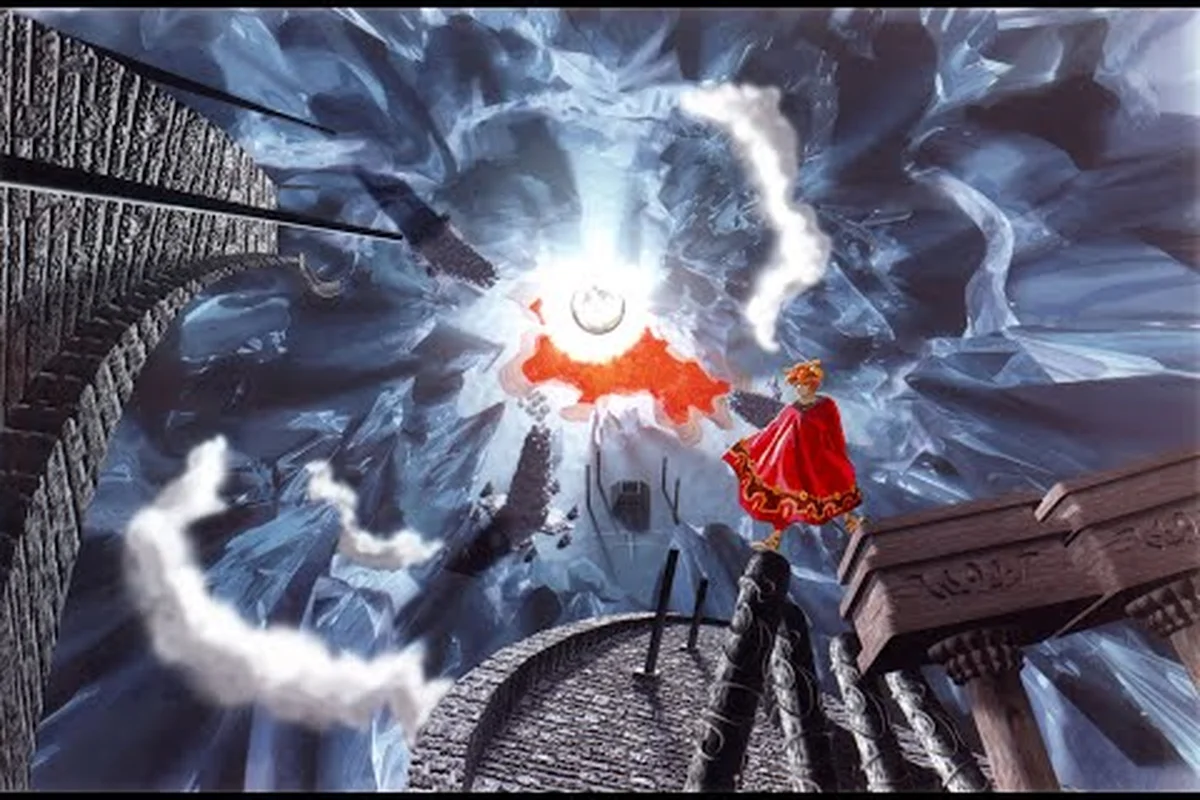
The Terranigma trivia guide exists because this 1995 Quintet action RPG hides more under its surface than most players ever discover, from regional release mysteries to community-documented glitches that speedrunners still exploit today. Understanding these hidden layers transforms a standard playthrough into a completely different experience, which is why dedicated fans have spent decades cataloguing every oddity, exploit, and undocumented mechanic. Whether you want to break the game open with known glitches or simply appreciate the strange history behind its missing North American release, this guide consolidates the most valuable discoveries from player communities and preservation efforts.
Terranigma Development History and Regional Release Secrets
The most enduring piece of Terranigma trivia is that the game never launched in North America, a fact that shaped its cult status for three decades. Developed by Quintet and published by Enix in Japan on October 20, 1995, the game reached PAL territories through Nintendo in 1996, but Enix had already closed its US subsidiary by the time localization could have happened. According to community preservation data, this regional gap created an entire generation of players who first experienced the game through import copies or emulation, which is why the terranigma trivia guide community remains so active on platforms like the subreddit dedicated to the game.
The 2026 re-release announcement changed the landscape dramatically, bringing the game to Steam for the first time with confirmed features including Steam Achievements, Steam Cloud, Family Sharing, and single-player support. The Steam community hub opened at announcement and immediately filled with threads debating whether the port is emulator-based or a native build, with players requesting scanline filters, widescreen options, and updated English translation quality. One particularly active thread asks whether the German localization will retain its original naming conventions, while Brazilian Portuguese text requests have also surfaced repeatedly.
| Region | Release Date | Publisher | Notes |
|---|---|---|---|
| Japan | October 20, 1995 | Enix | Original release, Japanese text |
| PAL (Europe/Australia) | 1996 | Nintendo | English, German, French, Spanish |
| North America | Never released | N/A | Enix US subsidiary closed before localization |
| Steam re-release | Announced 2026 | TBD | Achievements, Cloud, Family Sharing confirmed |
The protagonist's journey begins in Crysta, a village in the internal Darkside of a hollow Earth, where Ark opens a forbidden door and releases the demon Yomi. What follows is a resurrection arc spanning five towers that restore continents to the external Lightside, followed by the revival of plants, birds, animals, and eventually mankind itself. The story takes a darker turn when Ark confronts the scientist Beruga, who unleashes the Asmodeus virus to create a controlled population, which remains one of the most discussed narrative twists in the game's community threads.
Why the Missing North American Release Still Matters
The absence of a North American launch created a fragmented player base that still influences how the game is discussed today. PAL players grew up with official English text, while North American fans relied on fan translations of the Japanese version, leading to subtle terminology differences that persist in modern discussions. The terranigma trivia guide community has spent years reconciling these translation gaps, which becomes especially relevant now that the Steam re-release has sparked requests for an updated English script that could standardize terms across regions.
Community reports from the subreddit indicate that nostalgia threads frequently reference the "never released in North America" story as a defining part of the game's identity, alongside Bloody Mary difficulty discussions and ending interpretations. The re-release hype threads following the August 2026 announcement have revived all of these conversations at once, creating a unique moment where veteran players and newcomers are sharing trivia in the same spaces. If you are exploring the game for the first time, the foundational mechanics are covered in the beginner guide, which walks through the opening hours in detail.
Terranigma Fun Facts Hidden in the World Design
The world structure of Terranigma is a puzzle box of interconnected systems, and many of the most interesting terranigma fun facts come from how Quintet layered meaning into the geography itself. The Earth is a hollow sphere with an external Lightside and an internal Darkside, a cosmology that directly mirrors the game's thematic concern with creation and destruction as reciprocal forces. Ark's journey from Crysta outward is not just a progression through levels but a literal expansion of the world map, which means the geography you see at any given moment is a reflection of how much you have already restored.
Kamui Fujiwara's character designs give the cast a distinctive look that sets Terranigma apart from other Quintet titles like Illusion of Gaia, and the soundtrack remains one of the most praised elements in player retrospectives. According to the official Steam store page, the game highlights snappy combat and pixel graphics alongside the soundtrack, which suggests the re-release is positioning the original presentation as a selling point rather than attempting a full remaster. This is consistent with community expectations that the port will preserve the 1995 aesthetic while adding modern convenience features.
Five Lesser-Known Details About the World
The game world contains numerous small details that reward attentive players, and several of these have become staples of terranigma fun facts lists across community forums. These details are not officially documented in any manual, which is why they circulate primarily through player reports and preservation threads.
-
Crysta's forbidden door is the catalyst for the entire plot, but the game never explicitly explains why Ark is drawn to it, leaving the motivation ambiguous and open to interpretation.
-
The five towers that restore continents correspond to five distinct environmental biomes, and the order in which you tackle them is not entirely linear, allowing for sequence variation.
-
Plant revival precedes animal revival, which precedes human revival, creating a deliberate ecological progression that mirrors real-world evolutionary stages.
-
The Asmodeus virus sequence is often cited by players as one of the darkest moments in any SNES-era RPG, and its implications are still debated in ending interpretation threads.
-
The Bloody Mary boss fight has become a meme within the community, with the Steam discussion hub featuring a thread titled "Who is ready to get brickwalled by Bloody Mary again?"
The depth of world-building trivia in Terranigma is one reason the game maintains such a dedicated following despite its limited original release. Players who document these details tend to discover new connections on subsequent playthroughs, which reinforces the game's reputation as a title that rewards repeated engagement rather than a single linear completion.
Terranigma Known Glitches and Exploits Overview
The terranigma glitches guide exists because the game, like most SNES-era titles, contains a number of quirks that range from harmless visual oddities to progression-breaking bugs. Community documentation of these issues has been ongoing for decades, and the Steam re-release has added a new dimension to the conversation as players speculate about which glitches will survive into the modern port. Understanding these known glitches before you encounter them can save hours of frustration, especially if you are attempting a completionist run or a speedrun where specific exploits are part of the route.
The most commonly reported glitches fall into several categories: collision detection failures, event flag errors, inventory anomalies, and audio desynchronization. Some of these are tied to specific hardware behaviors on the original SNES, while others are reproducible on emulators and will likely carry over to any emulator-based re-release. Community testing data is still being compiled for the 2026 port, but the general consensus is that a faithful emulation would preserve most original quirks unless the development team actively patches them out.
| Glitch Category | Frequency | Severity | Player Impact |
|---|---|---|---|
| Collision detection failures | Common | Low | Getting stuck on geometry, walking through objects |
| Event flag errors | Uncommon | High | Progression blocks, skipped cutscenes |
| Inventory anomalies | Rare | Medium | Duplicated or missing items |
| Audio desynchronization | Common | Low | Music or sound effects out of sync |
| Visual sprite corruption | Rare | Medium | Graphical artifacts, flickering sprites |
How to Identify and Avoid Progression-Breaking Glitches
Not all terranigma known glitches are created equal, and the ones that matter most are those that can permanently block your save file. Event flag errors are the most dangerous category because they can leave you unable to trigger a required cutscene or advance past a specific story beat. The best defense is frequent saving in multiple slots, a practice that the community universally recommends for any playthrough of the game, whether on original hardware or emulator.
Some glitches are actually beneficial, which is why speedrunners catalog them carefully. Collision detection failures can sometimes allow you to walk through walls or skip entire sections of a dungeon, and these exploits form the backbone of many terranigma speedrun tricks. The distinction between a harmful glitch and a useful exploit is entirely contextual: the same collision quirk that lets a speedrunner skip a puzzle can trap a casual player in geometry if triggered unintentionally.
If you want a more structured overview of how to handle the game's systems safely, the survival tips guide covers healing and status management fundamentals that remain relevant even when you are not actively trying to break the game.
Terranigma Speedrun Guide and Route Optimization
The terranigma speedrun guide has evolved significantly over the years as runners have refined routes and discovered new skips. Unlike more popular speedrun titles with thousands of active runners, Terranigma has a smaller but highly dedicated community that treats route optimization as a collaborative project rather than a competition. The result is a speedrun scene that is unusually transparent about its discoveries, with new terranigma speedrun tricks often shared publicly within days of being found.
Speedrunning this game requires a different mindset than casual play because you are intentionally triggering glitches that would be detrimental in a normal run. The most important techniques involve manipulating the game's collision detection to bypass dungeon segments, abusing the Darkside/Lightside transition to skip cutscenes, and managing the resurrection sequence to minimize travel time. Each of these techniques has been documented through community testing, and the routes that incorporate them are considered the current standard for any serious attempt.
Core Techniques for Faster Runs
The following techniques represent the most commonly used terranigma speedrun tricks in current routes, based on community documentation and player reports. These are not beginner-friendly and should only be attempted after you have a solid understanding of the game's normal mechanics.
-
Collision clipping through wall edges to skip locked doors and dungeon puzzles
-
Cutscene skip via precise input timing during the Darkside/Lightside transition
-
Resurrection order manipulation to reduce backtracking between towers
-
Boss pattern exploitation to force specific attack sequences that are faster to punish
-
Inventory duplication in rare cases to obtain key items early
The speedrun community has also documented a number of terranigma fun facts that emerge from repeated playthroughs, including subtle differences in enemy behavior that only become apparent when you are executing the same encounter dozens of times. These observations feed back into route development, creating a cycle where trivia knowledge and speedrun optimization reinforce each other.
For runners who are still learning the fundamentals, the essential tips for new players guide provides a foundation in core mechanics that will make advanced techniques easier to execute. Without a solid grasp of normal movement and combat timing, the precision required for speedrun tricks will feel insurmountable.
Terranigma Glitches Guide for the 2026 Re-release
The August 2026 announcement of the Steam re-release has created a unique situation for the terranigma glitches guide community: nobody knows yet which glitches will survive the porting process. The Steam community hub is already filled with threads debating whether the port is emulator-based or native, and the answer to that question will determine the glitch landscape of the new version. An emulator-based port would likely preserve most original quirks, while a native port would require the development team to make deliberate decisions about which behaviors to replicate.
Players have also requested specific features that would interact with glitch hunting, including scanline filters and widescreen options that could alter how collision detection manifests on modern displays. The requests for updated English translation quality are particularly relevant to the glitch community because some documented exploits depend on specific text timing that could change if the script is rewritten. Community testing data on these questions is still pending, and the subreddit is actively compiling player reports as the release date approaches.
What to Expect from the Modern Port
The terranigma trivia guide community has also noted that the re-release will finally give North American players an official English version for the first time, which could standardize terminology across regions and eliminate decades of translation confusion. This is a significant development for trivia documentation because it provides a canonical reference point that has been missing since 1995. Until the port ships, however, all existing documentation remains based on the original Japanese and PAL versions, and players should treat any new information as provisional until verified against the actual release.
| Port Feature | Impact on Glitches | Impact on Speedruns |
|---|---|---|
| Emulator-based port | Likely preserves original glitches | Routes remain viable |
| Native port | Glitches may be patched | Routes need re-testing |
| Updated translation | Text timing may change | Cutscene skips may break |
| Achievement system | New goals, no glitch impact | No direct impact |
| Steam Cloud | Easier multi-save testing | No direct impact |
Frequently Asked Questions
Is Terranigma a sequel to Illusion of Gaia?
Terranigma is the third game in Quintet's loose thematic trilogy that includes Soul Blazer and Illusion of Gaia, though the stories are not directly connected. Players familiar with Illusion of Gaia will recognize similar themes of resurrection and ecological restoration, which is why community discussions often treat the trilogy as a spiritual sequence rather than a narrative one.
Why did Terranigma never release in North America?
Enix had closed its US subsidiary by the time localization could have been arranged, which meant there was no publisher to handle a North American release. The game reached PAL regions through Nintendo in 1996, but North American players were left without an official version until the 2026 Steam re-release was announced.
What is the most famous Terranigma glitch?
Collision detection failures are the most commonly discussed glitches because they enable both harmful progression blocks and beneficial speedrun skips. The same wall-clipping quirk that lets a runner bypass a dungeon puzzle can trap a casual player in geometry, which is why the community catalogs these behaviors carefully.
Can I speedrun Terranigma on the Steam version?
The speedrun viability of the Steam version depends on whether the port is emulator-based or native, a question the community is still investigating. If the port preserves original collision behavior, existing routes should remain viable, but any changes to text timing or event flags could break specific skips.
Where can I find the Terranigma speedrun community?
The Terranigma subreddit and Steam community hub are the primary gathering places for speedrunners and glitch hunters. Both spaces host active discussions about route optimization, newly discovered tricks, and re-release testing, and the community is known for sharing discoveries publicly rather than keeping techniques private.